

On the morning of July 8, the National Science and Technology Award Conference, the General Assemblies of the Members of the Chinese Academy of Sciences and the Chinese Academy of Engineering, and the 11th National Congress of the China Association for Science and Technology were grandly convened at the Great Hall of the People. Xi Jinping, General Secretary of the CPC Central Committee, President of the People’s Republic of China, and Chairman of the Central Military Commission, attended the conference,presented awards to the recipientsof the State Preeminent Science and Technology Award and other awards, and delivered an important speech.
The project “Key Technologies and Major Engineering Applications of Precision Blasting,” led by AcademicianXie Xianqiof Jianghan University, won the Second Prize. This honor not only marks the university’s first-ever National Science and Technology Award, but also makes Jianghan University the only Hubei provincial university toreceive this award in the past five years.
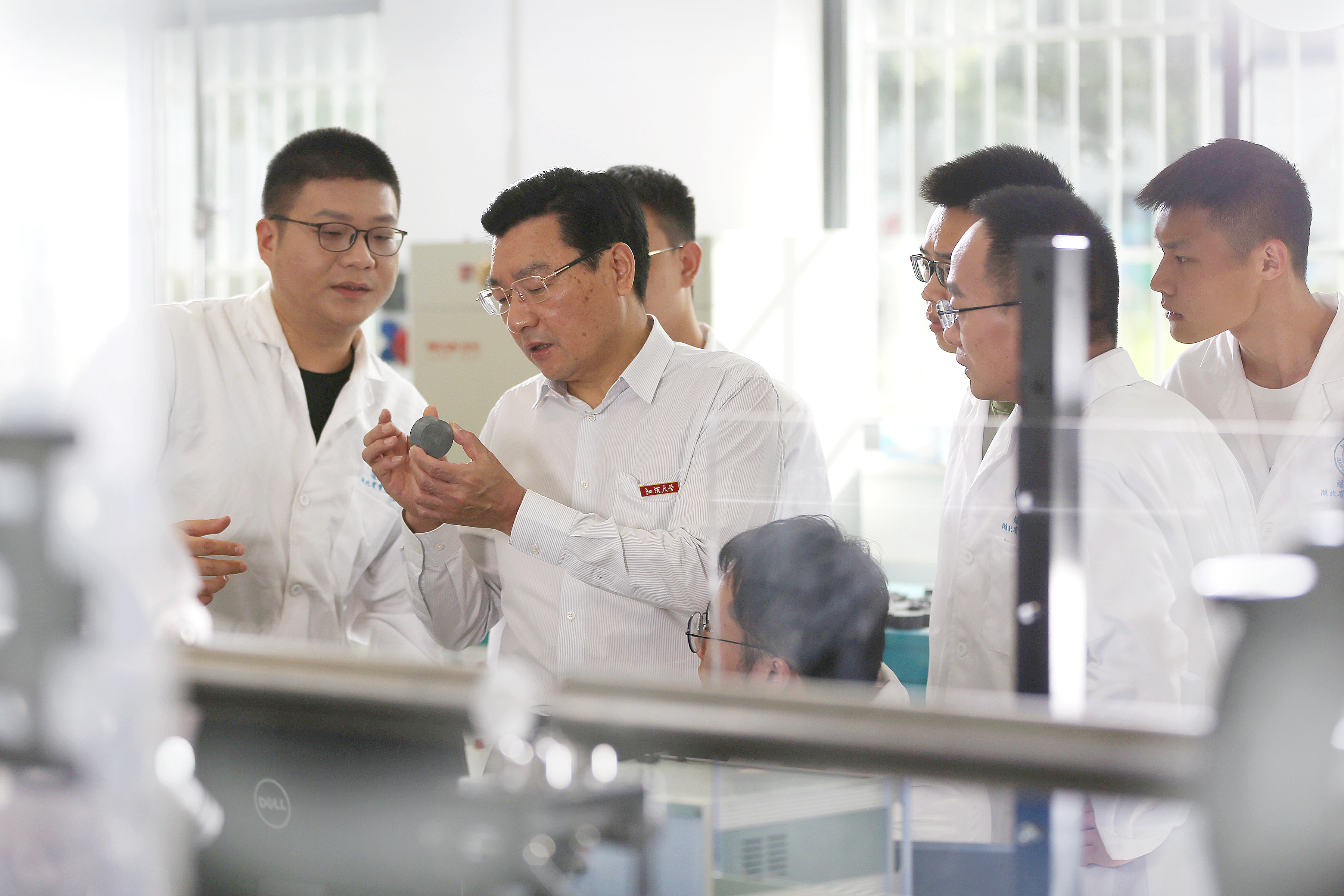
The projectrepresents a major achievement of AcademicianXie Xianqi’s research team. Faced with the dual challenges of rapid growth in demand and the safety and environmental red line in traditional blasting technology, the team first proposed the innovative concept of “precision blasting” internationally in 2008. Since then, in response to the new features of recent blasting projects—large scale, high risk, and stringent requirements—the team has devoted more than a decade to dedicated research, achieving further breakthroughs in fundamental theory, core equipment, and key technologies.
The project’s outcomes have enabled China’s engineering blasting technology to achieve three major innovative leaps—refined effect analysis, sophisticated blasting equipment, and precise effect control—resolving a series of key scientific and technological bottlenecks. The project established a refined analysis theory for blasting effects and a quantitative engineering design method, solving the problem that blasting processes are difficult to observe and accurately calculate; revealed the intrinsic mechanisms of blasting load and medium response, and developed precisely controllable blasting devices and intelligent construction equipment, achieving domestic substitution of industrial electronic detonators and on-site mixed explosives; and innovated multi-effect synergistic precision control technology, successfully solving a series of worldwide challenges such as low blasting efficiency in large mines, difficult control of the collapse posture of high-rise buildings, and excessive vibration damage to infrastructure caused by blasting.
It is reported that blasting technology is an important support for national economic developmentand that China is the world’s largest consumer of explosives and detonators. At present, industrial electronic detonators and on-site mixed explosives produced using technologies developed through the project have achieved import substitution and hold the largest market share in China, giving blasting engineering a “Chinese chip.” To date, the project’s outcomes have been widely applied in more than 600 major national projects, including the Julong Copper Mine in Tibet, the Baihetan Hydropower Station, the Hongyanhe Nuclear Power Station in Liaoning, and the Zhuanyang Viaduct in Wuhan, directly generating economic benefits of RMB 38.7 billion and contributing an outstanding “Chinese solution” to global blasting engineering.
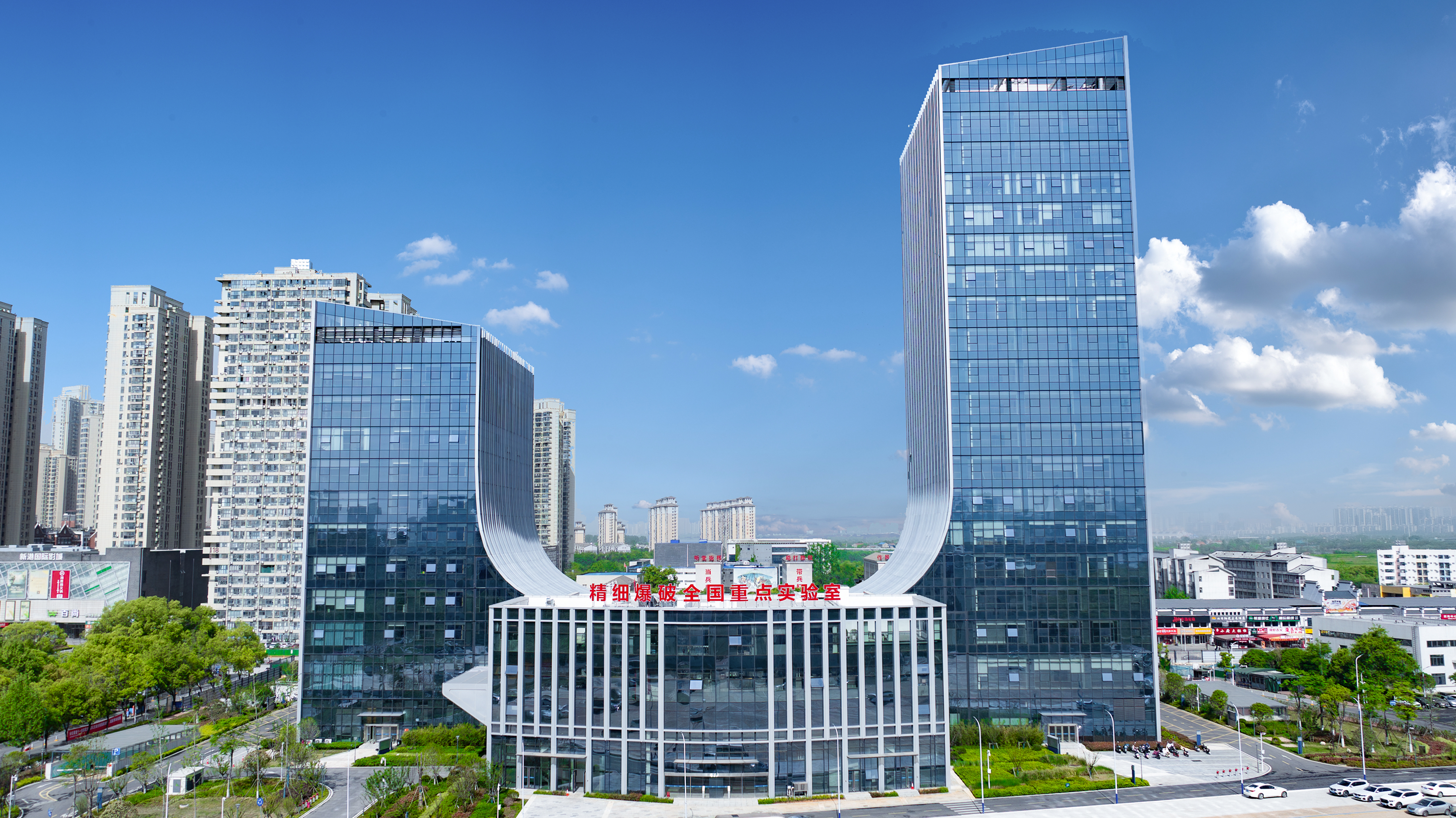
The project’s receipt of the Second Prize of the National Science and Technology Progress Award represents both a high recognition of Academician Xie Xianqi’s team for their decades of dedicated, focused research and theirservice to major national strategic needs,and a landmark achievement of Jianghan University in fulfilling its mission as an “urban university” and contributing to local economic development. Going forward, the university will continue to be guided by scientific and technological innovation, deepenindustry–academia–research–applicationcollaboration,contributemore“Jianghan University wisdom” to Hubei’s development as a strategic pivot and Wuhan’s construction of the “Five Centers,” and strive to write a new chapter in building a high-level urban university.